A Conversation with
Jonah A. Thorne III
Thursday Media Group is proud to publish To the Man I Called Father, the debut memoir by Jonah Thorne III. We spoke with the author about the book, the choice to write under a pseudonym, and what it means to tell a story that was never supposed to be told.
TMG. Let’s start with the obvious. Why a pseudonym?
JT. Because the story isn’t only mine. My daughter is in this book on nearly every page. She is an adult now, and she has built a life — a real one, with work she cares about and people who love her. She is not ready to be publicly identified as a survivor of what happened, and she may never be. That is her decision to make, not mine.
If I had published under my real name, anyone with a search engine could find her in five minutes. So I borrowed a name. Jonah, because of what he went through. Thorne, because of the pain it causes. The third because, well, the men in my family share the same name, and one of them is now on a sexual predator list. The choice of name isn’t decoration. It’s the first sentence of the book.
TMG. The book opens with you writing a letter of forgiveness to your father, seven years after the abuse came to light. Why begin there?
JT. Because most readers will assume a book like this ends with forgiveness — that forgiveness is the destination. I wanted to put it at the front so the reader understands from page one that forgiveness is not the same as reconciliation, nor is it the same as letting go of justice. It took me seven years to get to the point where I could even write that letter. Most of those seven years were spent fighting for justice, making sure my father paid for what he did and that my daughter would have a voice. The rest were spent trying to recover from all of it.
I also wanted the reader to understand the man writing the book. Not the man I became in the worst moment of my life. The man who eventually found his way out.
TMG. You write about your father with extraordinary care for who he was before — the man who taught you to ride a bike, play baseball, and fix cars. Was that hard to hold onto while writing?
JT. It was the hardest part of the book.
For six years, I had buried every fond memory of my childhood. I guess I made a survival decision without realizing it. I stopped talking about my childhood. I stopped telling my own stories — stories I loved, stories that were foundational to who I was. I realized even less what that decision would cost me — that if I wanted to survive what my father had done, I had to kill the father I loved as well as the man I hated. So I buried them both: the father I hated for what he did to my daughter and my family, and the father I loved from the time I was born, the loss being too painful to dwell on. The cut was so complete that anytime someone talked about their childhood or parents, I would withdraw from the conversation, even the room.
I was especially surprised by how much it affected my creativity — I lost the sense of wonder and imagination that had always come from my inner child to begin with. It made my work impossible on some days. I was so used to clearly seeing an end result at the beginning of every project, and then communicating that to others. When I lost my childhood — my source — I lost my view.
A therapist eventually asked me whether I could let those memories come back without letting him back in. That question reorganized everything. The man who taught me to swing a hammer in the woods is real. The man who hurt my daughter is also real. Both of them lived inside the same body, and pretending one of them never existed was a way of letting him take more from me than he had already taken. I wrote the early chapters of this book to give myself permission to remember.
TMG. The book moves between two extended crises — your son’s medical issues and your daughter’s abuse. Why structure it that way?
JT. Because they happened that way. The hardest thing I had to come to terms with as a father is that while my wife and I were sitting in an ICU watching one child fight for his life, the other child was being groomed and abused by the person I trusted the most, in the place we believed was the safest place we had. I didn’t have a choice about the order of those events. I only had a choice about whether to write around them or write through them.
I also wanted readers to understand something about how predators work. My father didn’t strike when our family was strong. He struck when we were already on our knees. We sent our daughter to my parents because we had nowhere else to send her. He used the worst moment of our lives as a door.
TMG. The hospital scene with your son is one of the most physically difficult to read in the book. There is a moment when you have to ask your ten-year-old son to open his eyes so his eyelids don’t fuse to his corneas. How did you decide what to put on the page and what to keep off?
JT. I asked one question of every scene. Does the reader need to be in this room, or am I dragging them in for the wrong reason? If the answer was the first, I wrote it as plainly as I could and got out. If the answer was the second, I cut it.
The scene with my son’s eyes is on the page because, to that point, it was the most horrible thing I have had to do, and it is forever burned into me. I will never forget that moment — I thank God that my son doesn’t remember it at all. It’s also in there because while we were fighting to save my son’s sight, we lost our own in a way. My father was able to take advantage of our state — our distraction. It’s what allowed him to groom our daughter.
TMG. There is a chapter titled “His Own Words” that I will not ask you to describe. I will only ask: how did you decide to include it?
JT. There was never a chance that it wasn’t going in the book.
What is on those pages is the only piece of evidence in this book written in my father’s voice. And from the first moment I realized what that image was, I even heard it in his voice. During the trial, he never took the stand or spoke a word in his own defense. He never apologized to my daughter. The closest thing to an admission of guilt came in a text message to me that didn’t mention her once.
My daughter drew a portrait of my father. She drew her grandfather’s likeness from memory and surrounded his face with the vile things he had spoken to her while he was hurting her. She was able to give us his testimony in his own words. To leave it out would have been to leave him with the last word, which is exactly what he wanted, and exactly what the legal system almost gave him.
I included it because the only way she could communicate the horror of what she had to deal with was through art. And it makes sense that it is the only image in the book.
TMG. What about the cover? Who designed it, and what were you trying to communicate?
JT. That was me. I designed the cover.
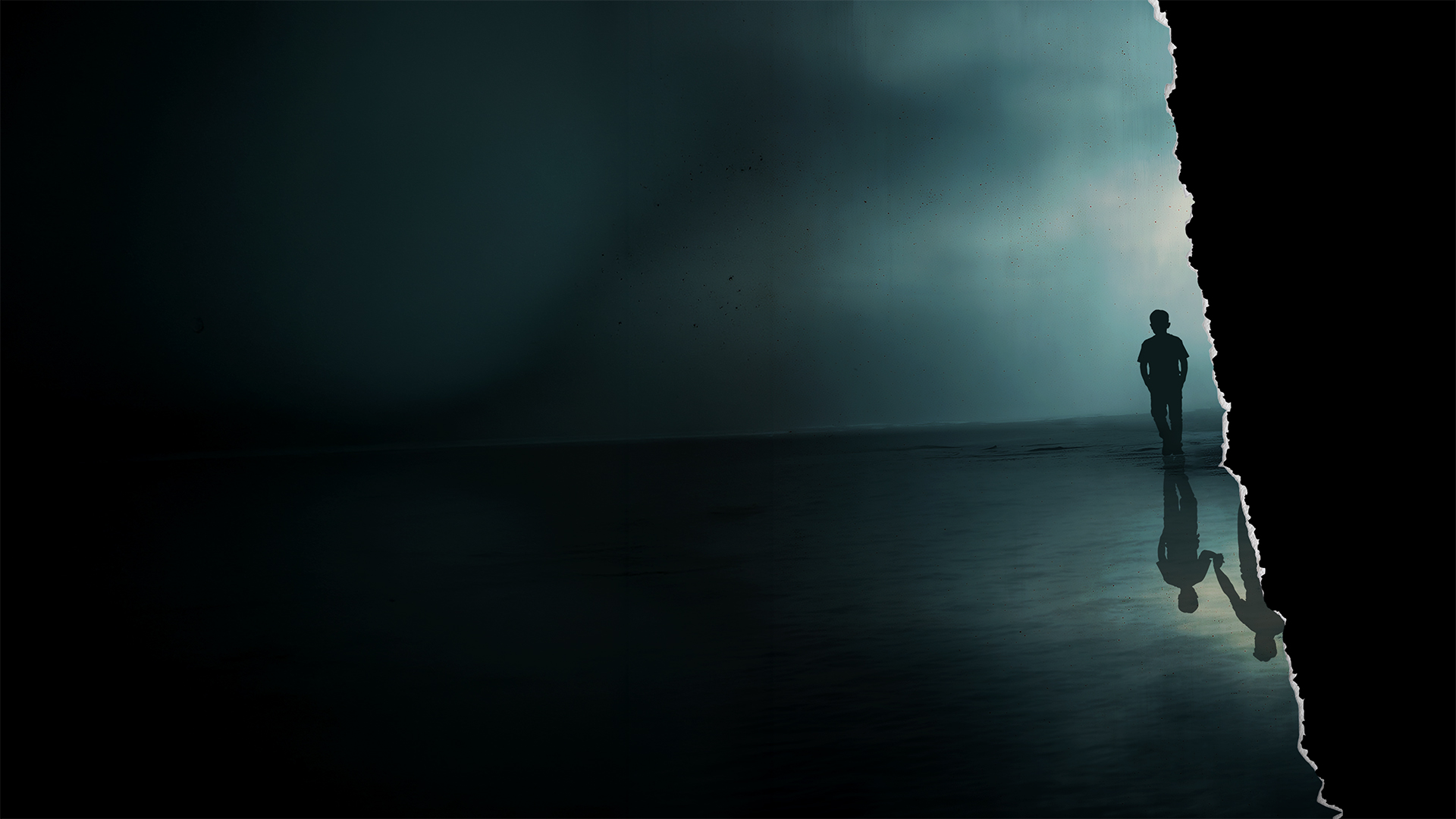
As I was outlining the book, I thought a lot about what I wanted the cover to say. Writing the second chapter — the chapter where I’m a nine-year-old boy who loves and is in awe of his father, how I shut that part of my life off and how I had to figure out a way to bring that little boy back without his father — it had a profound effect on me. The cover is the visual embodiment of that journey.
TMG. The book is unsparing about the criminal justice system. You describe it as “a broken-down machine.” Can you talk about that?
JT. I want to be careful here, because the victim advocates and the police officers and the prosecutors we worked with were, by and large, doing the best they could inside a system that was not built to serve us.
It was built to serve the state. My daughter was groomed and abused over a five-year period. Dozens of acts and years of abuse were reduced to three charges, because — and this is a direct quote from a prosecutor — “the state doesn’t like to pile on first-time offenders.” My father spent four years on what amounted to yard arrest while his legal team filed continuance after continuance. He changed his plea to guilty the morning of trial, after years of pleading not guilty.
It was one last defense tactic to keep my daughter from ever telling her story in open court, and it was one final plea for mercy — the mercy he denied my daughter. He served a four-year sentence.
There is a kind of cruelty in being told, again and again, to lower your expectations of justice. We did everything right. My daughter was prepared. The evidence was overwhelming. And the outcome was that a man who hurt a child for five years walked out of prison after four years.
I wrote the legal chapters of this book for the readers who are about to enter that system and have been told it works the way it does on television. It does not.
TMG. Your wife is one of the quiet centers of this book. The marriage survives ten years of cumulative trauma — medical crisis, the abuse, the legal battle, your own collapse. How?
JT. I think about this so often. I have seen so many marriages that don’t survive a fraction of what ours did. How did we end up closer together?
So much had been taken from us already — neither one of us was willing to lose anything or anyone else, including each other.
Don’t get me wrong, it was tough, and there were days when we had to walk away from each other. We screamed at the circumstances. We cried at the kitchen table. We were in completely different stages of grief at almost all times. But we never made each other the enemy. It didn’t always feel like it, but we chose to be on the same side.
Even after saying all that, I honestly don’t know how we made it through everything and came out stronger than when we went in.
Miracles seldom look the way we expect them to.
TMG. There’s a moment late in the book — without spoiling it — where the family dog plays a role you describe as life-saving. You write about it almost matter-of-factly. Was that deliberate?
JT. Yes. I didn’t want that moment to feel like a literary device. It happened the way it happened. A dog put his big wet nose against my hand at a moment when I was not going to be there much longer. He does it sometimes — when I’m in a quiet, contemplative mood, or stuck in my own thoughts, he uses his nose to nudge me. I guess he just had really good timing that day.
TMG. You write that you lost your faith and eventually found it again, not because of a moment of revelation, but because of a series of small ones. What would you say to a reader whose faith is in pieces right now?
JT. I wonder sometimes if what I actually had back then was faith — or just belief.
I was speaking to a friend early on. My wife had reached out to him because I was in such a bad place; he had been my youth pastor when I was a kid. We were talking through everything I was processing, and he asked if I had prayed about it. I said it without even thinking: “I don’t know what I believe anymore.” At the time, it was very true. I wasn’t angry at God. But after everything we had been through — my son, then my daughter — I was questioning all of it.
What I have now is very different. And because of it, I am different.
It started with small things. Unlikely coincidences. To be honest, I wasn’t receptive to them early on — I ran from them, for years. Then one day I stopped running. I stopped turning off the music my wife would leave playing in the car. I started letting go of the anger I had been holding on to.
Then a video crossed my feed at just the right moment: pain doesn’t come to destroy you; it comes to stretch what is weak inside you so you can carry what is coming.
I don’t know if that is true for everyone. I only know it was true for me.
It felt less like choosing to come back and more like admitting I had nothing left to lean on — and in that moment I needed something that would hold me up. That isn’t an argument for anything. It’s just a description. The reader will have to find their own way.
TMG. One last question. Who is this book for?
JT. It was for my wife and for me. A record of what we lived through, what we survived, and a reminder — to us — of what we can survive together.
It’s for parents trying to survive what no parent should have to go through. It’s for fathers who think they failed their children or family, and who don’t know what to do with that grief. It’s for the survivors who haven’t told anyone, who never had a voice, or never got justice, and live with that regret. They need to know they aren’t the only ones.
It’s also for my daughter, who someday may write her own version of her story. This book is from my point of view. Hers would be from hers. I have moments where I hope she writes it — I think she would have a lot to say. Then I remember everything I had to relive to write it, and hope she doesn’t.
I felt like I had to.
This conversation discusses child abuse and suicide. If you or someone you know needs support, the 988 Suicide & Crisis Lifeline is available 24/7 by call or text. RAINN’s National Sexual Assault Hotline is 1-800-656-HOPE (4673).
To the Man I Called Father will be available from Thursday Media Group.